When the Injury Exceeds Standard Care.
Trauma & Injury Reconstruction in Palm Beach County
Injury reconstruction is surgery that restores the structure, coverage and function of tissue damaged by trauma. It includes coverage of exposed bone and hardware, limb salvage and replantation, facial fracture repair, peripheral nerve repair, and reconstruction after burns and complex wounds.
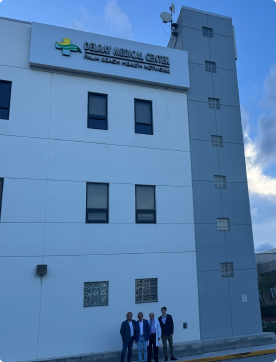
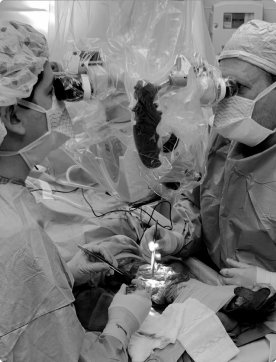
Plastic Surgery Trauma Associates (PSTA) is an independent surgical practice. Its surgeons perform reconstructive surgery for trauma patients at Delray Medical Center, a Florida-designated Level I trauma center.
Institutional Doctrine in Reconstructive Trauma
Advanced Wound Salvage & Reconstructive
Tissue Doctrine
Complex geriatric avulsion or fragile tissue injury requires immediate intervention. Delay narrows options. Programmatic reconstructive doctrine is informed by peer-reviewed publication and physiologic investigation.
Geriatric Trauma Tissue Salvage
Fragile dermal structures and perfusion-limited tissue in elderly trauma patients require modified reconstructive strategy. Management prioritizes structural stabilization, perfusion preservation, and staged wound integration.
Reconstructive Trauma Divisions
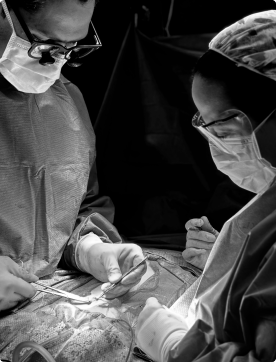
Tertiary reconstructive services organized by physiologic complexity and structural injury.

Extremity & High-Energy Trauma Reconstruction
Limb salvage and reconstruction for exposed bone, hardware, and structural extremity injury

Spinoplastics — Spine Soft Tissue Reconstruction
Muscle flap coverage supporting complex spinal instrumentation.

Facial Fracture & Craniofacial Trauma
Reconstruction of high-energy facial fractures and panfacial skeletal injury.

Limb Salvage & Replantation
Microsurgical revascularization and staged reconstruction after traumatic amputation.

Peripheral Nerve Reconstruction
Nerve repair, grafting, and functional recovery integrated within extremity salvage.

Burn & Complex Wound Reconstruction
Tissue coverage and staged stabilization for burns and complex wounds.
Integrated Within a Level I Trauma System
Clinical services are delivered within a Florida-designated Level I trauma center, coordinated across orthopedic trauma, vascular surgery, spine surgery, cardiothoracic surgery, and critical care.
Operative sequencing, perfusion assessment, and staged reconstruction are executed within
continuous inpatient monitoring and tertiary referral infrastructure.
Reconstruction is not isolated procedure. It is system-integrated surgical strategy.
When to Escalate / Transfer
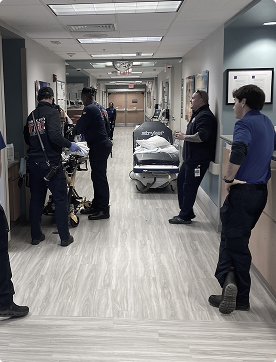
Early escalation influences structural durability and functional outcome.
Transfer is appropriate for:
- Traumatic amputation or threatened replantation
- Exposed bone, hardware, or tendon
- Perfusion compromise or evolving tissue viability
- Combined tendon and nerve injury
- Failed prior reconstruction or wound breakdown
- Complex geriatric avulsion or fragile tissue injury
DELAY NARROWS OPTIONS.
Clinical Priorities in Geriatric Trauma
Fragile dermal structures and perfusion-limited tissue in elderly trauma patients require modified reconstructive strategy.
Management prioritizes structural stabilization, perfusion preservation, and staged wound integration within multidisciplinary trauma care.
These injuries are not minor. They are physiologically unstable.
Research & Academic Foundation
Programmatic reconstructive doctrine is informed by peer-reviewed publication, physiologic
investigation, and national surgical presentation
- Perfusion-guided operative decision-making
- Structural muscle-based reconstruction (SMART technique)5
- Geriatric avulsion reclassification and tissue stabilization6,7
- Peripheral nerve integration in limb salvage
- Spinoplastics methodology for instrumented spine reconstruction
Reconstruction strategy is data-driven and systems-based
Reconstruction After Severe Extremity Injury: Published Literature
The Gustilo–Anderson classification of open fractures describes Type III injuries as those with severe soft-tissue injury, segmental fracture or traumatic amputation.1
The reconstructive ladder describes soft-tissue options ranging from local to distant tissue, and surgeons may use more than one rung at once, for example a free muscle transfer covered with a split-thickness skin graft.2
In a historical 1986 series of 532 patients with complex extremity trauma, Godina reported fewer flap failures and infections when free-flap reconstruction was performed within 72 hours of injury than when it was delayed.3 This early evidence supports appropriately timed microsurgical reconstruction; it does not mean that early surgery is indicated for every patient or that it guarantees a better outcome.
A published series of severe open tibial fractures described a combined orthopaedic and plastic surgery protocol of radical debridement outside the zone of injury, skeletal stabilization, and early soft-tissue cover with a vascularized muscle flap.4
Physician Publication Related to Trauma Reconstruction
Andrew Mark Klapper, MD, is first author of a 2026 early-feasibility report describing the sandwiching muscle acellular reconstruction technique (SMART), which uses two layers of extracellular-matrix biologic scaffold to bridge acute full-thickness skeletal muscle transections, in three trauma cases.5
Injury Reconstruction: Common Questions
Is trauma reconstruction done in a single operation?
Not always. Severe injuries are often reconstructed in stages: wound cleaning and bone stabilization come before soft-tissue coverage, and the timing depends on the patient’s overall condition.
How is trauma reconstruction different from wound care?
Wound care evaluates and manages wounds, often without surgery. Trauma reconstruction is surgery to restore tissue, cover exposed bone or hardware, or restore function after an injury.
How can a physician refer a patient?
Use the Trauma Transfer or Professional Referral buttons at the top of this page.
Clinical References
- Gustilo RB, Anderson JT. Prevention of infection in the treatment of one thousand and twenty-five open fractures of long bones: retrospective and prospective analyses. J Bone Joint Surg Am. 1976;58(4):453-8. PMID 773941.
- Levin LS. The reconstructive ladder. An orthoplastic approach. Orthop Clin North Am. 1993;24(3):393-409. PMID 8101984.
- Godina M. Early microsurgical reconstruction of complex trauma of the extremities. Plast Reconstr Surg. 1986;78(3):285-92. PMID 3737751.
- Gopal S, Majumder S, Batchelor AG, Knight SL, De Boer P, Smith RM. Fix and flap: the radical orthopaedic and plastic treatment of severe open fractures of the tibia. J Bone Joint Surg Br. 2000;82(7):959-66. PMID 11041582.
- Klapper AM, Dardano AN, Huaman GM, Huaman GG. Sandwiching Muscle Acellular Reconstruction Technique: An Early Feasibility Technique for Acute Skeletal Muscle Transection Stabilization. Plast Reconstr Surg Glob Open. 2026;14(5):e7755. PMID 42199247.
- Moradian S, Klapper AM. A novel way to treat skin tears. Int Wound J. 2016;13(2):283-6. PMID 25756343.
- El Haddi SJ, Kragel M, Klapper A. Creation of skin grafts from traumatic avulsed skin. BMJ Case Rep. 2021;14(7):e239545. PMID 34266814.